Table VI is the final table in the individual weapons Integrated Weapons Training Strategy. This table is designed to be a step easier than Table V. By this point, Soldiers should be accustomed to the holds and positions used to qualify; they should be adept at changing magazines and moving between these positions and they should have an accurately zeroed weapon.
Table VI contains 18 firing tasks with an administrative pause programmed at the end of each phase to facilitate emergency reloading and changing positions. Tasks 1-4 are fired from the prone, unsupported firing position. Tasks 6-10 are fired from the prone, supported firing position. Tasks 11-14 are fired from the kneeling, supported firing position and tasks 15-18 are fired from the standing, supported firing position. Shooters must hit at least 23 of 40 targets to pass this event.
To download an ammunition calculator I created in Excel, please click the link below:
See the table below for consolidated planning information regarding Table VI:

Table VI can include night and CBRNE shoots whenever the Table II simulator is not available. See the table below for more:

The table below lists ammunition requirements for all tables, including the standard day shoot as well as night and CBRN shoots.

The Tables below list ammunition requirements for Table VI specifically, broken down by phase:

As with table V, there should be a three second delay between each engagement. After each phase (ie, prone unsupported to prone supported) there should be a ten second transition delay to allow the shooter time to reload and assume the next position. The following tables show the engagement sequence by target type.
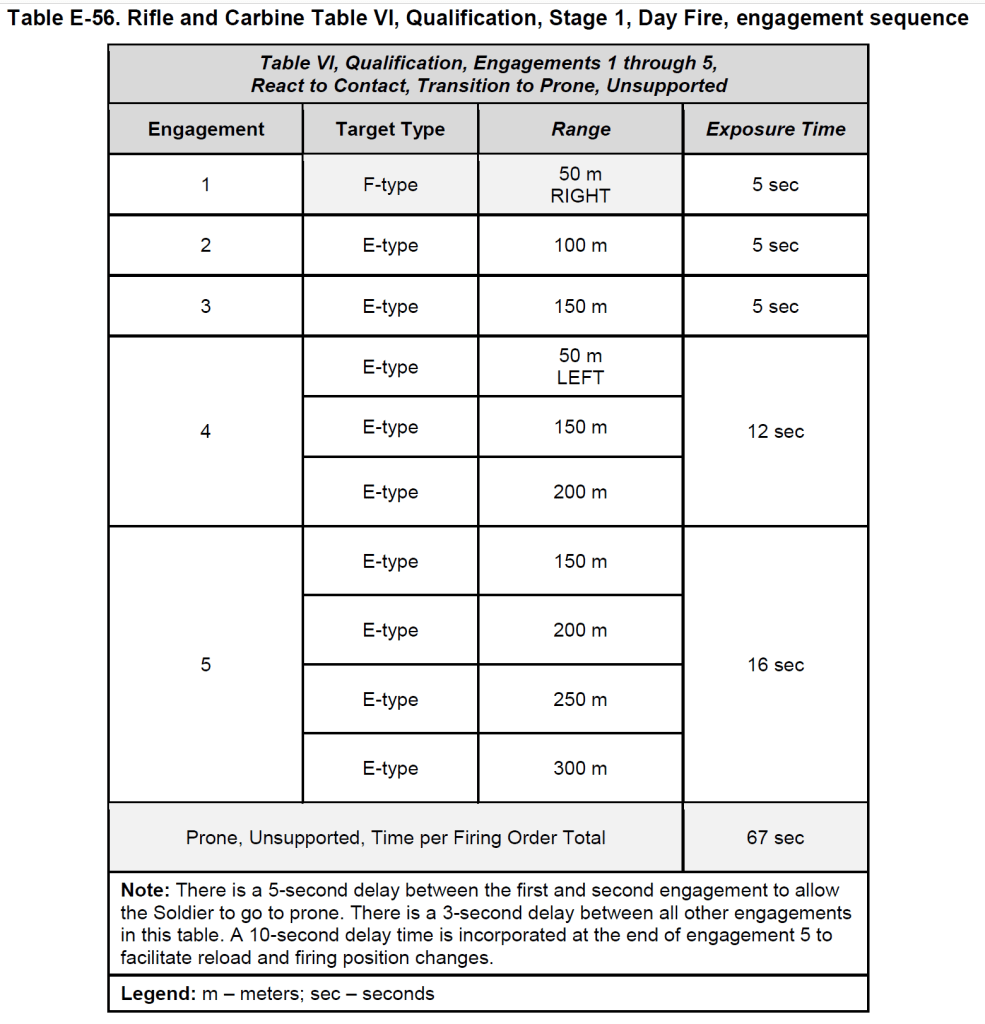

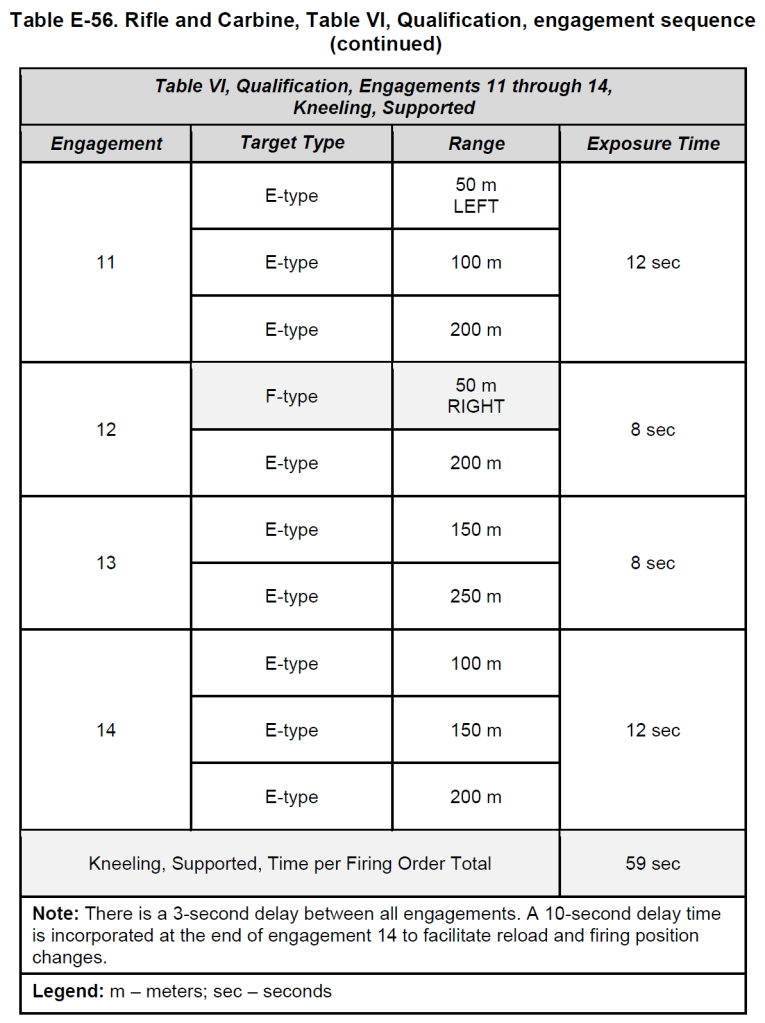

Below is an example throughput schedule for Table VI. A similar table can be found for night and CBRN shoots on page E-83 of TC 3-20.40.

To go through the entire Table VI course of fire, please click here.
Please continue on to the following links to better understand each table individually.
 The Integrated Weapons Training Strategy Explained